Attractions
Rock Ledge Ranch Historic Site at Garden of the Gods1401 Recreation Way, Mail Code: 1200
Colorado Springs, Colorado 80905
Photo credit History Colorado
Explore the past up-close in Colorado Springs and the Pikes Peak Region.
The Pikes Peak Region is home to a trove of rich history you can experience through dozens of museums, attractions, events and more. From the Ute People who originally called this place home to cowboys, gold miners and Olympic & Paralympic greats, you'll find stories as colorful as our landscape.
The Pikes Peak Region has been home to incredible scenery for thousands of years. If you're curious about how these stunning landmarks and natural features came to be, you're in luck! Dive into fascinating natural history at one of our nature and resource centers. The first admirers of this region's gorgeous landscapes were the Ute, Cheyenne, Arapaho and the other tribes who lived at the base of Tava (Sun Mountain), now commonly known as Pikes Peak. These people and cultures left a permanent mark upon the region and their history lives on around us. Being such a beautiful place to live, it's also no wonder early settlers were drawn to this area.
Learn all about the region's intriguing natural history, the area's first inhabitants and the early settlers of the area at the spots below!
General William Jackson Palmer, a Civil War hero from Pennsylvania, came to the region in search of possible railroad routes in 1869. One year later, he founded the Denver and Rio Grande Railroad and purchased land to create what is now Colorado Springs along its route.
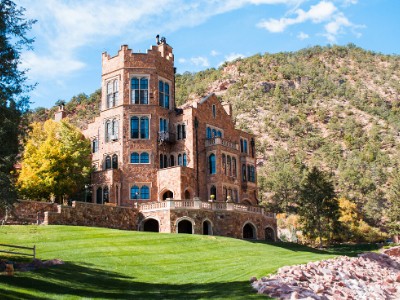
In 1871, Colorado Springs officially became a city. The Palmers – both General Palmer and his wife, Queen – played an instrumental role in developing both the Springs and surrounding communities. Many staples of the community today, including North Cheyenne Cañon Park, the Colorado Springs Gazette and the Antlers Hotel, were built and orchestrated by the couple. Glen Eyrie Castle, founded in 1871, was built as a home for the Palmers and can still be visited today.
From its founding, Colorado Springs was a premiere destination for those seeking treatment from tuberculosis. The dry, fresh mountain air offered many respite from the disease and once cured many remained in the region with their families and businesses. At one point, a third of Colorado’s population had ties to TB. Sanatoriums and tuberculosis huts popped up around the Pikes Peak Region, and visitors can spot these huts repurposed at Rock Ledge Ranch or on the main street of Manitou Springs.Another
In the 1890s, gold was discovered on the western slope of Pikes Peak, one of the richest gold strikes in American history. Almost overnight, the Cripple Creek Mining District grew from an isolated cattle pasture to the home of more than 50,000 people. People passed through Colorado Springs on their way up the pass, and many designated the city as their “homebase” for both their families and businesses.
You can learn about the Gold Rush days at the Victor Lowell Thomas Museum and the Cripple Creek Heritage Center. To this day, gold is still being mined in Cripple Creek and the influence of our mining heritage can be seen all over the region.
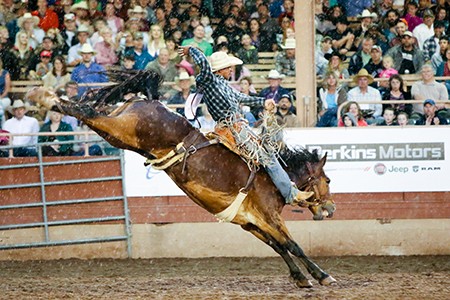
Mining also brought the Wild West spirit to the region! The Pikes Peak Region is rich with Western heritage and culture. The Pikes Peak or Bust Rodeo has been a staple in the Colorado Springs community since it was started by Spencer Penrose in 1937. Both then and now, the rodeo showcases top talent from around the country and draws visitors from around Colorado and beyond. You can learn more about all things rodeo at the Pro Rodeo Hall of Fame!
In the 1940s, the U.S. Army opened Camp Carson, marking the beginning of what is now a strong military presence in this region. In 1954, the Air Force broke ground for the United States Air Force Academy to continue this military tradition. Today’s Colorado Springs history is capped with a military flair. Colorado Springs is home to major military installations including Fort Carson, Peterson Air Force Base, the U.S. Space Command, NORAD (North American Aerospace Defense Command), Schriever Air Force Base and the United States Air Force Academy.
As home to the Air Force Academy, Colorado Springs quickly became a hub for all things aviation and space. From museums to restaurants, you can still experience this innovative industry in a myriad of ways today.
The Space Foundation was formed in 1983 in Colorado Springs to unite the global space community and advance growth and progress in the industry. The Foundation works in Colorado Springs and beyond to improve collaboration and education in the industry. They hold the annual Space Symposium right here in Colorado Springs, an event that brings together space professionals from around the globe each year. The Space Foundation also operates the Space Foundation Discovery Center, an interactive attraction for those of all ages. The Discovery Center offers hands-on exhibits and learning labs to inspire the next generation of space enthusiasts.
Colorado Springs was coined Olympic City USA for a reason. The city is home to approximately 60 national and international sports organizations including 25 National Governing Bodies, the U.S. Olympic & Paralympic Museum, the U.S. Olympic and Paralympic Committee and the U.S. Olympic and Paralympic Training Center. You can even test your abilities like a professional athlete on natural training grounds like the Manitou Incline! The city is steeped in sportsmanship and the spirit of competition, making it the perfect location for major sporting events like the Pikes Peak International Hill Climb. We're also home to world-class sports venues where you can catch thrilling hockey matches, soccer championships and more!
In 1859, Colorado Springs history is marked with the founding of Colorado City, which became the first settlement in the Pikes Peak region. It was the territorial capital for a short period and served as a supply camp for miners traveling to the mining camps west of Denver. Discover more of this historic district at the Old Colorado City History Center.
In November 1806, American explorer Zebulon Pike traveled through the area and is credited for “discovering” Pikes Peak. He and his group attempted to reach the summit, but they were neither dressed nor equipped to climb the mountain that ultimately came to bear his name.
General William Jackson Palmer, a Civil War hero from Pennsylvania, ushered in a new era in Colorado Springs history in 1869. During his first visit to the area, he fell in love with its “most enticing scenery.” He predicted that there would soon be a great resort town at the base of Pikes Peak. One year later, he founded the Denver and Rio Grande Railroad and purchased land to create Colorado Springs along its route. In 1871, the Victorian spa resort town Palmer envisioned became a reality.
Welcome to Manitou Springs – just west of Colorado Springs.
This quirky mountain town is where natural mineral springs, historic architecture and artistic energy thrive.
Explore the breathtaking Pikes Peak with our guide on enjoying everything that this geological feat has to offer.
Throughout Colorado Springs history, the stunning scenic beauty was not the only thing that attracted people to the area. The sunny conditions and dry, mild climate of Colorado Springs and Manitou Springs made these communities popular for people suffering from poor health, especially tuberculosis.
In the 1890s, gold was discovered on the western slope of Pikes Peak, one of the richest gold strikes in American history. Almost overnight, the Cripple Creek Mining District grew from an isolated cattle pasture to the home of more than 50,000 people. Learn about the Gold Rush days at the Victor Lowell Thomas Museum and the Cripple Creek Heritage Center. As a result, by the turn of the 19th century, Colorado Springs was called "the city of millionaires." One of these millionaires was Spencer Penrose, who made his first fortune in Cripple Creek. He used his vast resources to build the Pikes Peak and Cheyenne Mountain Highways and to establish the Cheyenne Mountain Zoo, Will Rogers Shrine and The Broadmoor Hotel. He and his wife, Julie, created the El Pomar Foundation, which still supports many worthy causes in the Pikes Peak region and across Colorado.
At the turn of the century, inspired by a trip to the summit of Pikes Peak, Katharine Lee Bates penned what has become our country's most famous poem and song, "America the Beautiful."
In the 1940s, the U.S. Army opened Camp Carson, marking the beginning of what is now a strong military presence in this region. In 1954, the Air Force broke ground for the United States Air Force Academy to continue this military tradition. Today’s Colorado Springs history is capped with a military flair. Colorado Springs is home to major military installations including Fort Carson, Peterson Air Force Base, the U.S. Space Command, NORAD (North American Aerospace Defense Command), Schriever Air Force Base and the United States Air Force Academy.
Colorado Springs history is unusual compared to how the rest of the west was won. Founded in 1871 by General William Jackson Palmer, the quaint town began a resort area nicknamed “Little London” because of its popularity with English tourists. General Palmer had a grand vision for a sophisticated town, befitting his cultured wife, Queen.
Two years after founding the town, General Palmer opened the Antler's Hotel, an important landmark in Colorado Springs history. The resort welcomed U.S. and international visitors as well as those seeing the health benefits of the plentiful sunshine and dry climate.
Soon after opening the hotel, Palmer founded the Denver & Rio Grande Railroad. He contributed even more to Colorado Springs history by making grants or selling land for important civic institutions in the community. In the late 1800s, Colorado Springs developed into one of the most-visited destinations in the U.S.
Colorado Springs, the state’s second-largest city, has evolved into a sophisticated destination that has retained the charming ambiance of a small town. Many important buildings and landmarks are named for General Palmer including Palmer High School, the nearby town of Palmer Lake, Palmer Park and the Palmer Divide, just north of Colorado Springs.
Even before General Palmer envisioned and built the City of Colorado Springs, Pikes Peak served as a beacon attracting diverse cultures. These cultures left a permanent mark upon the region and Colorado Springs history. The Ute, Cheyenne and Arapaho are among the many American Indian nations that lived here or migrated through the area. The Ute would camp in the region’s red rock canyons and drink from the bubbling mineral springs that dot the town of Manitou Springs. The Ute name for Pikes Peak, Ta-Wa-Ah-Gath, translates to "Sun Mountain," for the way its slopes reflect the sun's rays.
The Spanish name for Pikes Peak was Almagre, a reference to the reddish color of the granite. This name is still used for the high, snow-capped ridge just south of Pikes Peak. Both French and Spanish flags flew over this region before the Louisiana Territory was purchased from France by President Thomas Jefferson in 1803.
In the early 1800s, the U.S. government sent out expeditions to explore and map the new territory. Zebulon Montgomery Pike was sent to what is now Colorado. In November of 1806, he attempted to climb the mountain that is named for him. He and his men were not adequately dressed and did not have the proper gear to make it to the summit in November. His journal, published in 1810, was the first book to describe this region and it inspired others to travel in his footsteps.
Today, Pikes Peak is known as America’s Mountain to honor Katharine Lee Bates, a visiting professor at Colorado College. After a trip to the summit of Pikes Peak, she penned the words of a poem that would eventually become the song “America the Beautiful”. Pikes Peak is a national icon and the ever-present silhouette of Colorado Springs history.
Pikes Peak Region Native History & Heritage
Colorado Springs was founded as a resort town in 1871, but the area's first residents had already called this place…
Mining in the Pikes Peak Region was a tremendous influence in Colorado Springs's history. Throughout the early nineteenth century, explorers reported that they found gold in the region's streams and rivers. The 1858 discovery of gold near the present site of downtown Denver sparked the Pikes Peak Gold Rush, so named after the best-known landmark in the region.
In 1890, the Colorado gold rush made it to the Pikes Peak Region when a cattle rancher and part-time prospector discovered gold on the Peak's western slope. Soon after, the Cripple Creek-Victor Mining District became Colorado's greatest gold camp attracting tens of thousands to the region.
To this day, gold is still being mined in Cripple Creek. The influence of our mining heritage can be seen all over, from the surviving structures in Cripple Creek to the mansions that tell the story of our “rich” Colorado Springs history.
Immerse yourself in the rich mining history of the Region with a visit to the Western Museum of Mining & Industry. Enjoy dynamic guided tours, interactive exhibits, and educational events. Witness a 37-ton Corliss Steam Engine in operation, learn how to pan for gold, see what rocks you eat, experiment with hands-on exhibits, picnic on our 27 acres, visit with our donkeys and much more! It's everything a gold-mining enthusiast and curious mind could want in a museum.
Founded in 1871, Colorado Springs, Colorado's second largest city, has evolved from a quaint, Victorian spa resort town to a sophisticated city, with a charming "small town" ambiance. With access to amazing recreation, scenery and activities, Colorado Springs and the region is known for its beauty, great outdoors and access to adventure. Located 70 miles south of Denver's International Airport and right off of Highways 25, 24 and 115, it’s a popular travel destination for families, couples and outdoor enthusiasts.
It seems appropriate that Colorado Springs, which draws more than 5.2 million overnight visitors annually, was itself founded by a visitor. In 1870, Civil War hero General William Jackson Palmer, on first seeing the region, wrote to his wife: “Could one live in constant view of these grand mountains without being elevated by them into a lofty plane of thought and purpose?” Almost immediately, Palmer began planning the city of his dreams, one that would become a major resort community. Today, more than 140 years later, people by the millions continue to come from all over the world, drawn by the same beauty that forever changed Palmer.
The Colorado Springs region's first inhabitants were American Indian people. The Ute, Cheyenne, Arapaho and other tribes gathered at the base of Pikes Peak¬America’s Mountain, near its abundant springs and in what is now called Garden of the Gods Park. The Ute name for Pikes Peak, Ta¬Wa¬Ah¬Gath, translates to "Sun Mountain Sitting Big", for the way its slopes collect and reflect the sun's rays. During their seasonal migration following vast herds of bison, the Ute would camp in nearby red rock canyons and visit the bubbling springs that we enjoy today.
The region lies along the extreme southwestern edge of what was the Louisiana Territory, which was purchased by President Thomas Jefferson in 1803. Prior to this purchase, both French and Spanish flags flew over the region. In 1795, several hundred Spanish colonial soldiers from Santa Fe, NM under the command of Juan Bautiste de Anza, traveled down Ute Pass in search of Comanche raiders. The Spanish name for Pikes Peak was "Almagre," a reference to the reddish color of the granite. This name is still used for the high, snow¬capped ridge just south of Pikes Peak.
Museums
Colorado Springs Fine Arts Center at Colorado College30 W Dale St
Colorado Springs, Colorado 80903
Museums
Colorado Springs Pioneers Museum215 S Tejon St
Colorado Springs, Colorado 80903
Museums
Cripple Creek Heritage Center9283 S Hwy 67
Cripple Creek, Colorado 80813
Museums
Dinosaur Resource Center201 S Fairview St
Woodland Park, Colorado 80863
Museums
Dr. Lester L. Williams Fire Museum375 Printers Pkwy
Colorado Springs, Colorado 80910
Museums
Garden of the Gods Visitor & Nature Center1805 N 30th St
Colorado Springs, Colorado 80904
Museums
Ghost Town Museum400 S 21st St
Colorado Springs, Colorado 80904
Museums
May Natural History Museum710 Rock Creek Canyon
Colorado Springs, Colorado 80926
Museums
McAllister House Museum423 N Cascade Ave
Colorado Springs, Colorado 80903
Museums
Michael Garman Museum & Gallery2418 W Colorado Ave
Colorado Springs, Colorado 80904
Museums
Miramont Castle Museum - Manitou Springs Historical Society9 Capitol Hill Ave
Manitou Springs, Colorado 80829
Museums
Money Museum818 N Cascade Ave
Colorado Springs, Colorado 80903
Museums
National Museum of WWII Aviation775 Aviation Way
Colorado Springs, Colorado 80916
Museums
Old Colorado City Historical Society1 South 24th St
Colorado Springs, Colorado 80904
Museums
Old Homestead House Museum353 Myers Ave
Cripple Creek, Colorado 80813
Museums
Outlaws and Lawmen Jail Museum136 W. Bennett Avenue
Cripple Creek, Colorado 80813
Museums
Penrose Heritage Museum11 Lake Circle
Colorado Springs, Colorado 80906
Museums
Peterson Air & Space Museum150 E Ent Ave
Peterson AFB, Colorado 80914
Museums
Pikes Peak Trolley Museum2333 Steel Dr
Colorado Springs, Colorado 80907
Museums
ProRodeo Hall of Fame101 Pro Rodeo Dr
Colorado Springs, Colorado 80919
Museums
Rock Ledge Ranch Historic Site at Garden of the Gods1401 Recreation Way, Mail Code: 1200
Colorado Springs, Colorado 80905
Museums
Rocky Mountain Motorcycle Museum19 N Tejon St
Colorado Springs, Colorado 80903
Museums
Space Foundation Discovery Center4425 Arrowswest Dr
Colorado Springs, Colorado 80907
Museums
U.S. Olympic & Paralympic Museum200 S Sierra Madre St
Colorado Springs, Colorado 80903
Museums
Victor Lowell Thomas Museum3rd & Victor Avenue
Victor, Colorado 80860
Museums
Victor Main Street500 Victor Ave
Victor, Colorado 80860
Museums
Western Museum of Mining & Industry225 North Gate Blvd
Colorado Springs, Colorado 80921
Museums
Will Rogers Shrine of the Sun4250 Cheyenne Mountain Zoo Rd
Colorado Springs, Colorado 80906
Museums
4th Infantry Division Museum1205 Nelson Blvd
Fort Carson, Colorado 80913 - At Gate 1
Museums
Museum of Colorado Prisons201 North First Street
Canon City, Colorado 81212
This website uses cookies to enhance your user experience on our website. Learn More